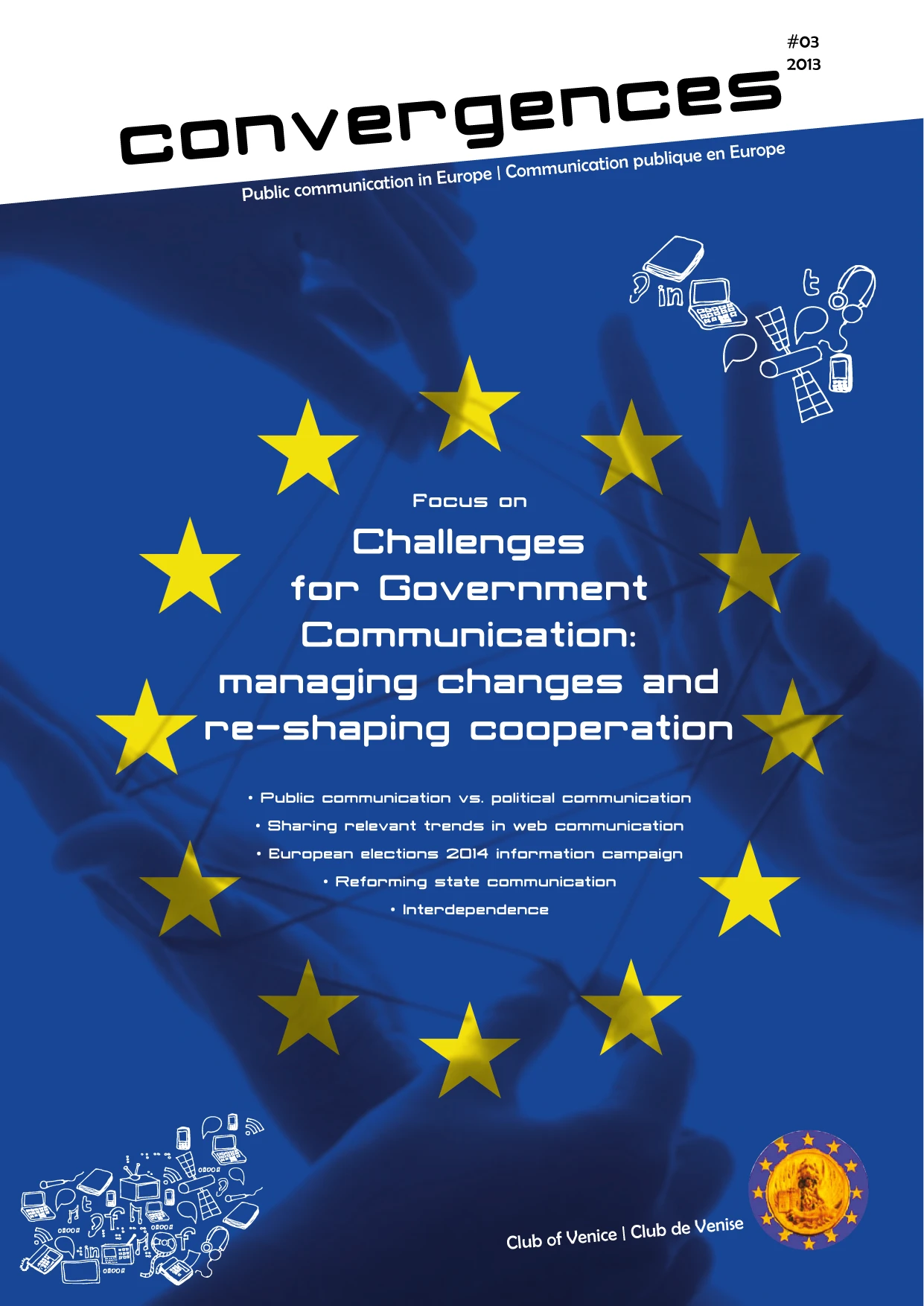
Winter 2013 (#3)
The third edition of “Convergences” addresses a pivotal and challenging period for public communication in Europe, marked by the unexpected termination of the Management Partnership agreements by the European Commission. This decision, driven primarily by budgetary constraints, has sparked a debate on the future of institutional cooperation and the risk of losing years of built-up synergy. Amidst this shift, the magazine celebrates Croatia joining the EU as its 28th member, highlighting the successful role of communication in the accession process. A significant portion of the content is devoted to the upcoming 2014 European elections, analyzing Eurobarometer data that reveals a deeply divided public opinion and a growing sense of national versus European identity. The publication also explores the concept of “communication interdependence,” urging member states to act collectively rather than in isolation to remain credible in an information-rich age. Trends in state communication are examined, particularly the shift from hierarchical authority to “network players” who must manage public expectations amidst spending cuts. The digital evolution remains a priority, with discussions moving beyond social media toward the complexities of Web 3.0 and the potential of Web 4.0. Case studies from France and South Eastern Europe provide practical insights into reforming state communication and re-inventing public sector interaction. Furthermore, the magazine emphasizes the need for transparent, “non-eurocratic” dialogue to engage young citizens and rebuild trust in the European project. Ultimately, the edition serves as a call for professional agility and renewed strategic cooperation to face the “new electronic feudalism” of the modern era.
Key Topics:
- End of Management Partnerships: The magazine analyzes the impact of the European Commission’s decision to halt formal partnership agreements, potentially shifting toward more ad hoc and less structured cooperation.
- European Elections 2014: Content focuses on the “Act. React. Impact.” campaign and the strategic need to address citizen disillusionment revealed by the latest Eurobarometer surveys.
- Communication Interdependence: This concept advocates for cross-border cooperation between government communicators to effectively reach audiences in a globalized media landscape.
- State Communication Reform: Articles explore how national governments are adapting to “backseat” roles, emphasizing personal responsibility and transparency during times of fiscal austerity.
- Croatia’s Accession: The publication highlights the “tangible demonstration” of European integration through Croatia’s entry and the long-term communication efforts that supported it.
- The Path to Web 4.0: Experts discuss the transition from the semantic web (3.0) to a “symbiotic web” (4.0), where interaction between humans and machines becomes more integrated.
- Public vs. Political Communication: A critical distinction is made between professional public information services and political campaigning to maintain institutional credibility.
- Social Media Maturity: The focus shifts from merely using social media to professionalizing its integration into government structures and managing the risks of digital “Big Data”.
- Citizen Engagement (Debating Europe): New platforms and initiatives like “Back to School” are presented as successful models for interactive, two-way communication between the EU and its youth.
- Club of Venice Synergies: The magazine reaffirms the Club’s role as a vital network for sharing best practices and coordinating strategies to restore public trust in the European project.